
European Entangled Atheisms
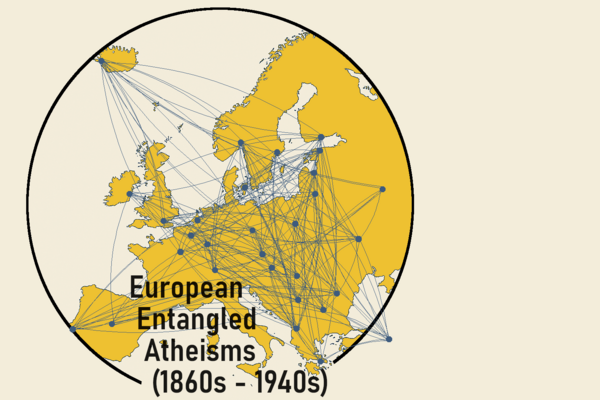
European Entangled Atheisms: Concepts of Unbelief and the People Shaping them from the 1860s to the 1940s
Funded by Deutsche Forschungsgemeinschaft
Project manager: Johannes Gleixner, Carolin Kosuch, Heléna Tóth
The aim of the network ‘European Entangled Atheisms: Concepts of Unbelief and the People Shaping them from the 1860s to the 1940s’ is to establish a link between historical research on European atheism and the emerging field of Secular Studies. Atheism is understood here, in both its conceptual and organisational dimensions, as a key element in the pluralisation of religion in the modern era. In particular, the network focuses on the interconnections and (attempted) implementations of atheistic concepts in practice. During the period under investigation, developments accelerated both organisationally and in terms of worldview. This marks the transition to decidedly atheistic worldviews, which, whilst not severing their dialectical connection to religion, were nevertheless able to address it in a controversial manner. The aim is to produce a digital edition of key atheistic texts translated into English, which also recognises and highlights the histories of atheistic figures in Western and Eastern Europe – often treated separately – as part of a transnational development. The Collegium Carolinum is contributing not only its specialist expertise but also its digital infrastructure to this project. Further information is available on the project’s website.